Interview with Bay County Public Library’s NASA Solar System Ambassador, Khelsea Rantanen
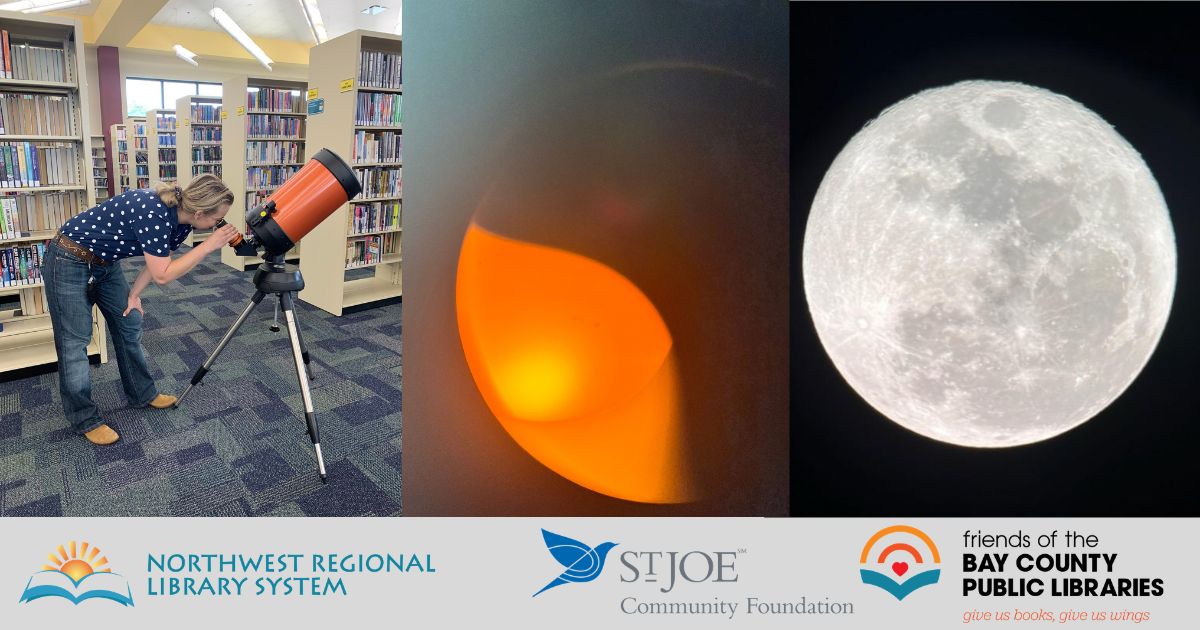
Khelsea Rantanen is the Head of Adult Services and NASA Solar System Ambassador for the Bay County Public Library. She is an extraordinary asset to the library and community with her wealth of knowledge and joy for learning about astronomy.
The Friends of the Bay County Public Libraries received a generous grant from the St. Joe Community Foundation to fund a new telescope and equipment for the library. Here is an interview with the expert!
What do you enjoy most about being a librarian?
I love the thrill of the hunt! As silly as it may sound, finding the right information at the right time can be more challenging than folks expect. Right now, we are inundated with an oversaturation of information on the Internet, but I can quickly narrow down the results. Connecting people to helpful, reliable information is one of the best feelings I have at work. Please ask us your reference questions, it’s never a problem!
How did you become interested in astronomy?
Some of my earliest memories as a kid are watching Star Trek: The Next Generation with my father. We would watch it on Wednesday nights with a bowl of chocolate chip mint ice cream, chocolate syrup and salted peanuts.
What has being a NASA Solar System Ambassador entailed? Any favorite library programs?
Being a NASA Solar System Ambassador entails most importantly a willingness to share information and knowledge about science, astronomy, and NASA’s various missions. I relish sharing my love for the future of space exploration with others, whether it be through stargazing or by discussing technological advances from innovations in STEM.
One of my favorite past programs was largely organized by my colleague Ashley Burlon. She invited Michael Sparks with US NORAD to speak about his awesome job! Recently, he was tasked as serving as a back-up for tor retrieving the Artemis II astronauts after their return from the Moon in case they landed in the Gulf. We paired this talk with Jupiter in opposition (best time to view a planet if the weather cooperates). Unfortunately, Jupiter played coy with us, so only a few folks were able to see it through a telescope. Those who perceived it among the patches of sky between the clouds were astounded to see Galilean moons (the same four moons Galileo saw in the 1600s). Recently, a young boy who had seen it that night remembered me from the event. He was still excited about seeing Jupiter and its moons which rekindled some of the joy I experience when others also take pleasure in celestial sights.
The Northwest Regional Library System has telescopes for check-out. How would someone go about that process?
The telescopes we lend are Orion Starblast with a 4.5 inch primary mirror and a zoom lens (it’s like having four lenses in one). You can search for them in the catalog at nwrls.com and place it on hold using your library card. You can also call your local library and place a hold over the phone, but be sure to have your library card number handy! Since you borrow the telescopes for a three-week period much like a book, it might feel like a long time to receive one since there are often many holds. Yet, the time will pass quicker than you realize. One you behold the moon in a telescope, it will have been worth the wait.
Can you share about the new telescope. What makes it so cool?
The new telescope is a Celestron C8. Its primary mirror is almost twice the size of our lending telescopes. The C8 offers much clearer and larger views of different celestial bodies. Under the right settings, you might even be able to see the polar ice caps of Mars. When the Friends of the Bay County Library purchased this telescope with funds from part of a generous grant from the St. Joe Foundation, we purchased many accessories to go with it. One of my favorite accessories is a solar filter. During the Gulf Coast Air Show, we could see a couple of sun spots on the surface of the Sun.
Any future programs in the works with the new telescope?
We are planning for a couple of events in the late autumn and winter. Those are better times to watch the night sky with a telescope because there is less moisture in the upper atmosphere. That means the view is more crisp and clear to view stars, planets, and the Moon.
Any advice for someone just starting to get into stargazing?
Simply step out your front door and look up. In this area, it’s best to look south towards the water because it tends to have a little less light pollution. Be sure to check out our books on stargazing and NASA’s Youtube channel to learn more about fascinating topics!
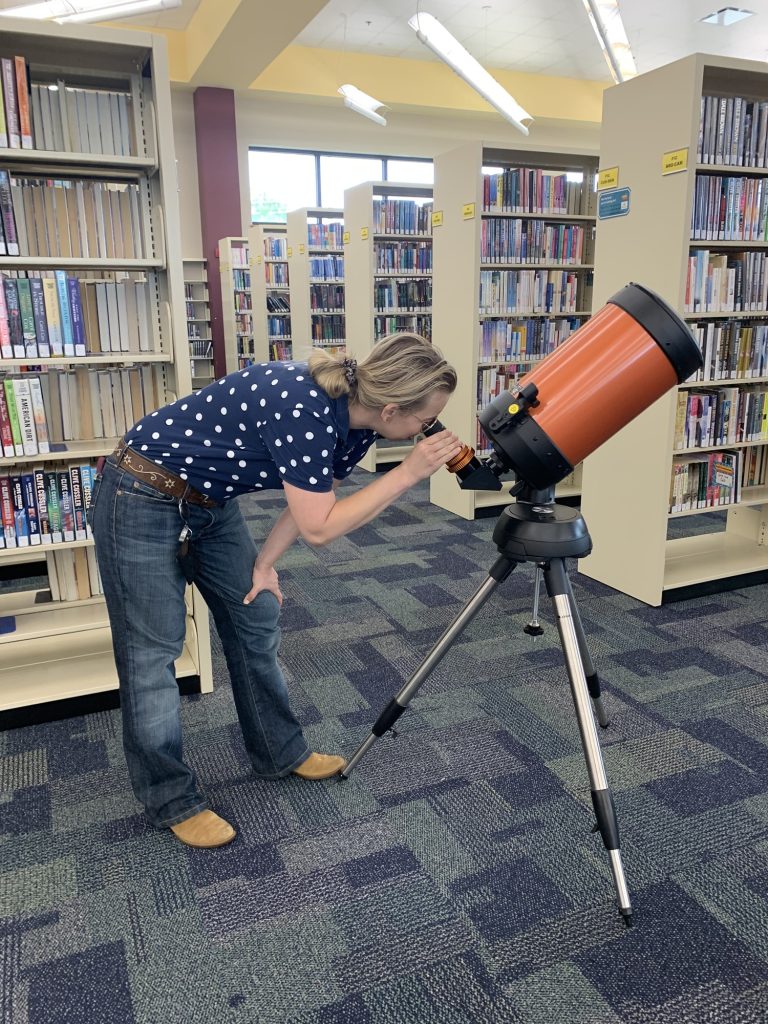
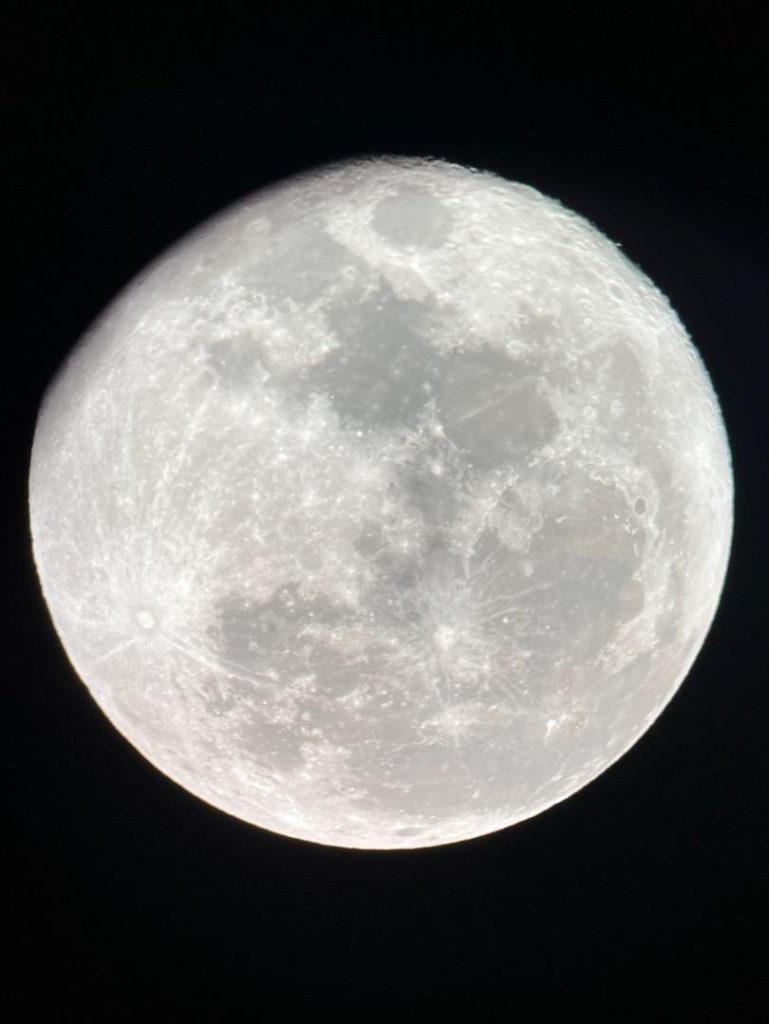
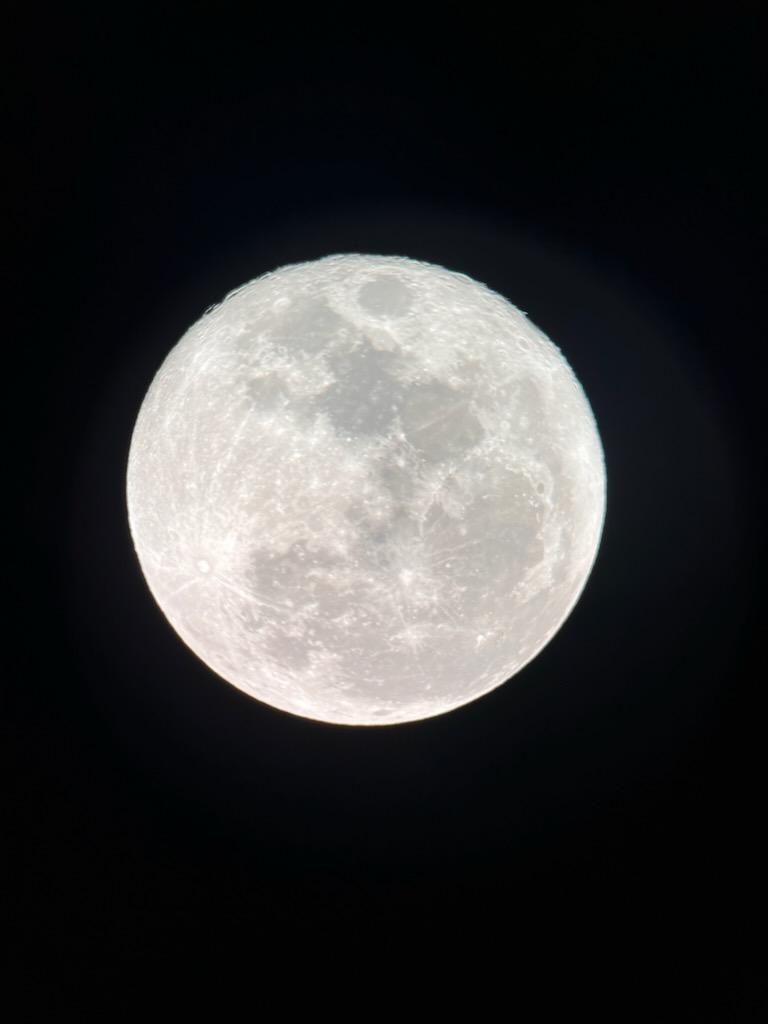
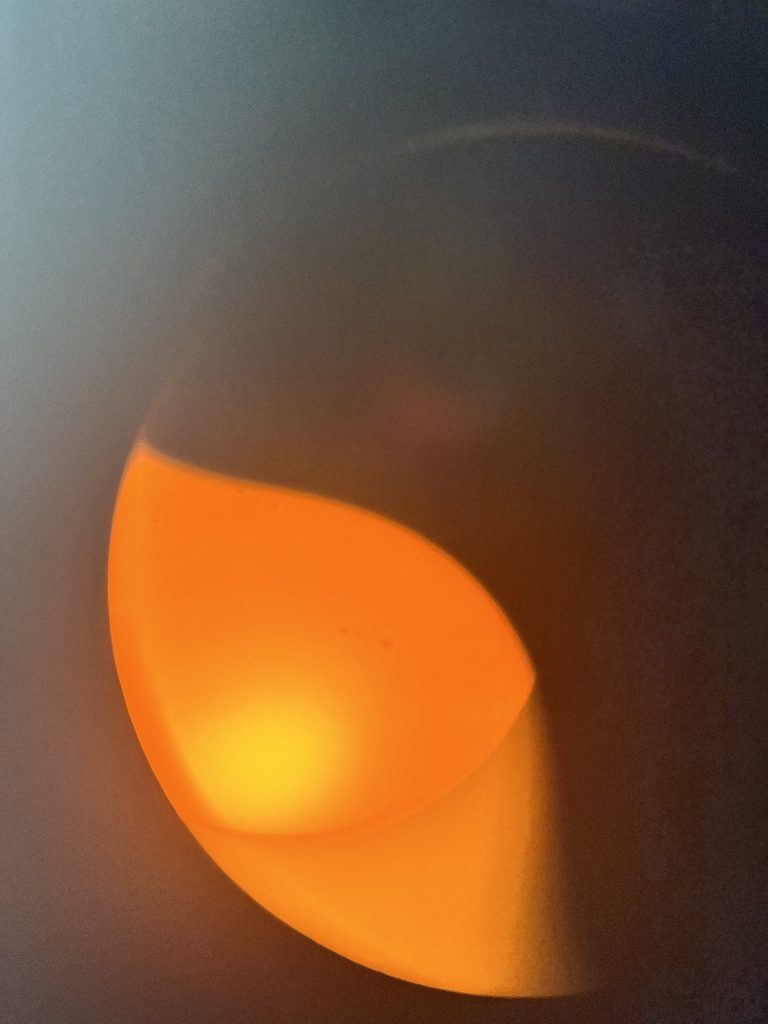
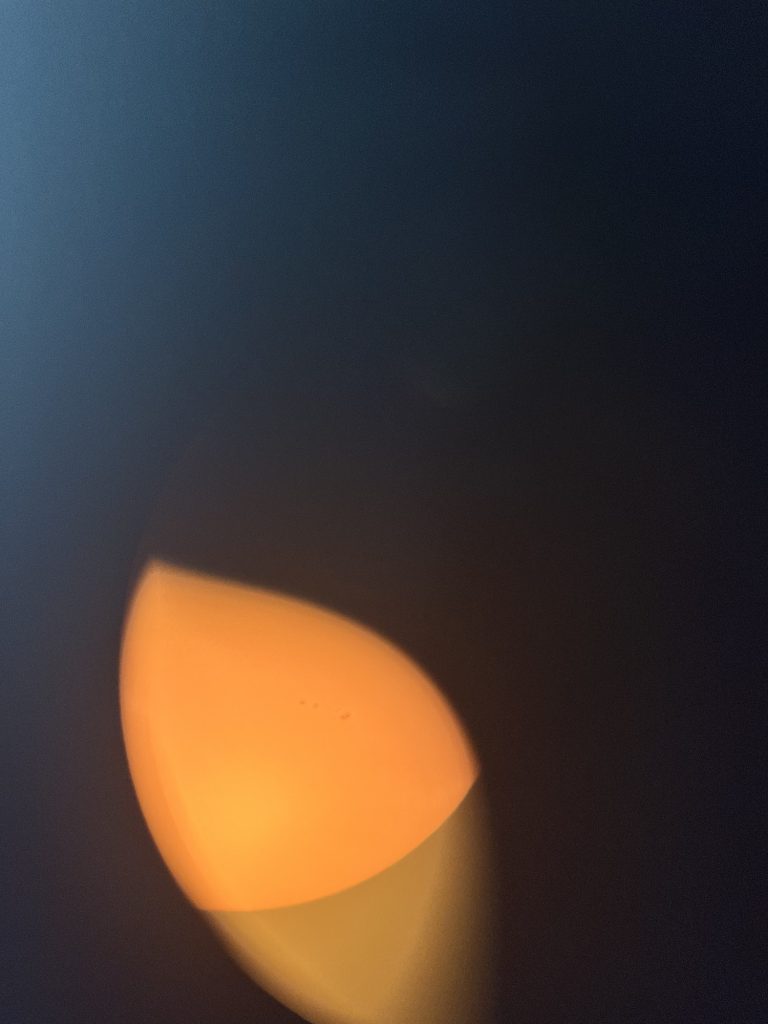
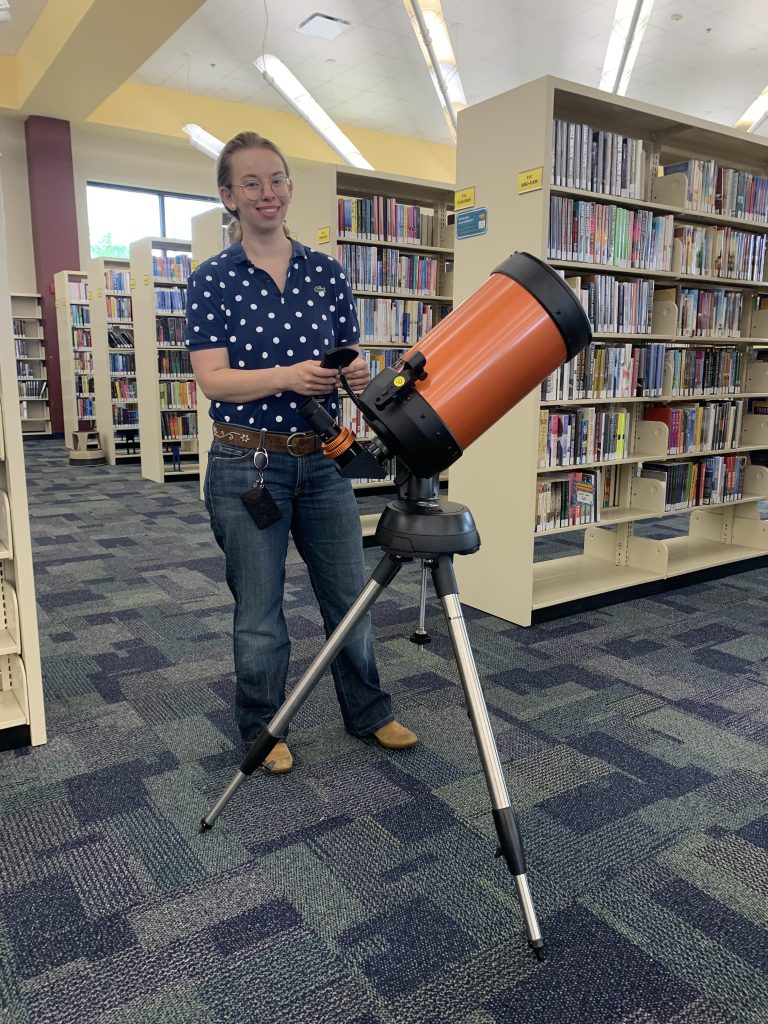
Images featured: Khelsea Rantanen in the Bay County Public Library with the new Celestron C8 telescope. Photographs taken with the Celestron C8 are of the moon, and the sun using the solar filter.